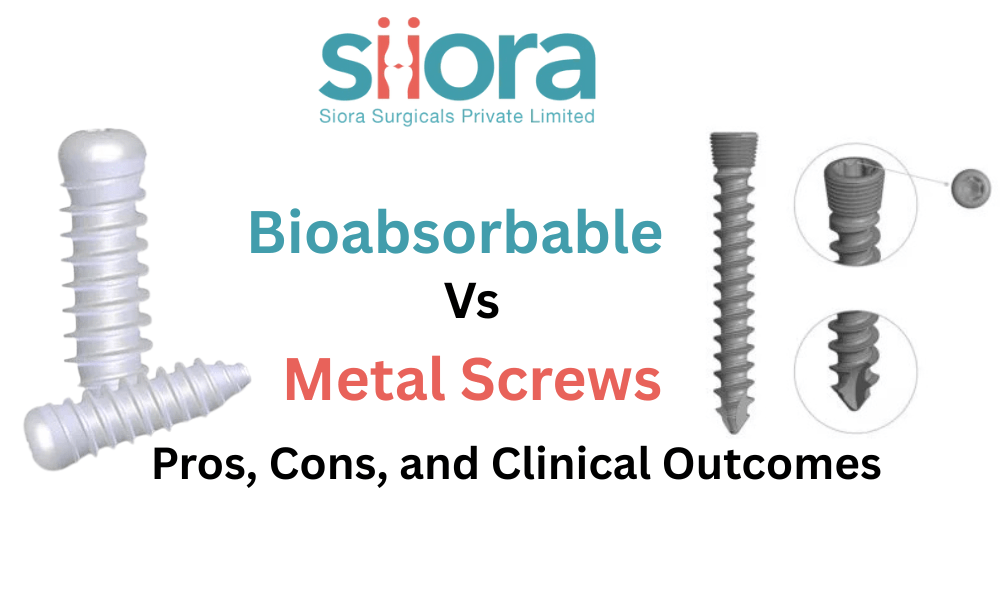
In orthopedic surgery, fixation hardware plays a crucial role in stabilizing bones and supporting healing. For decades, metal screws, usually made from titanium or stainless steel, have been the go-to option. But bioabsorbable screws are challenging the status quo, offering potential benefits that appeal to both surgeons and patients. So, how do they stack up? Here’s a breakdown of the pros, cons, and clinical outcomes of bioabsorbable versus metal orthopedic screws.
Bioabsorbable Screws: The Appeal of Disappearing Hardware
Bioabsorbable screws are made from polymers like polyglycolic acid (PGA) or polylactic acid (PLA), which gradually break down in the body and get absorbed. This means there’s no need for a second surgery to remove the hardware, an obvious plus for both recovery time and healthcare costs.
Pros:
- No need for removal: One of the biggest draws is that the screw disappears over time, eliminating the need for a second surgical procedure.
- Reduced imaging artifacts: Unlike metal, these screws don’t interfere with MRI or CT scans, which can be crucial for postoperative imaging.
- Potentially better outcomes in pediatric cases: Since children are still growing, bioabsorbable materials are less likely to interfere with growth plates.
Cons:
- Mechanical strength: These screws are generally less strong than metal ones. They can’t bear as much load and may not be ideal in high-stress areas.
- Inflammatory reactions: In some patients, the breakdown products can cause local inflammation or cyst formation.
- Variable degradation rates: Not all bioabsorbable materials break down at the same rate, which can affect healing if the support disappears too soon or lingers too long.
Metal Screws: The Reliable Workhorse
Metal screws have been the standard in orthopedic fixation for a reason. They’re strong, durable, and time-tested.
Pros:
- Superior mechanical strength: They’re highly reliable in load-bearing applications, making them ideal for fractures in high-stress areas like the hip or spine.
- Predictable outcomes: Surgeons are familiar with how metal behaves in the body, and the results are consistent.
- Long-term fixation: For patients with low healing potential, metal screws offer the ongoing support they might need.
Cons:
- May require removal: In many cases, particularly if the patient experiences discomfort or if the screw is near the skin, a second surgery is needed to remove the hardware.
- Imaging interference: Metal can create artifacts in imaging, making it harder to assess healing.
- Potential for allergic reactions: Though rare, some patients can react to nickel or other metals used in the screws.
Clinical Outcomes: What Does the Evidence Say?
When comparing outcomes, studies show that both types of screws can be effective—if used appropriately. For low-load applications like small bone fractures or soft-tissue fixation (e.g., ACL reconstructions), bioabsorbable screws have shown results comparable to metal. Some studies even point to better patient satisfaction due to the lack of follow-up surgery.
However, in high-load scenarios or in patients with osteoporosis, metal screws remain the more reliable option. They offer consistent structural support throughout the healing process and are less likely to fail under stress.
A common theme in clinical literature is that the choice between bioabsorbable and metal isn’t always black and white. It depends on factors like fracture location, patient age, bone quality, and surgeon experience.
The Bottom Line
Bioabsorbable screws offer an exciting alternative with real advantages in the right setting. But they’re not a one-size-fits-all solution. Metal screws continue to be indispensable, particularly in complex or high-stress cases. The future likely holds more innovation in hybrid materials and smarter biomaterials that blend strength with biodegradability.As the market evolves, the innovation seen from Top Orthopedic Medical Device Companies will continue to shape the standard of care, pushing for safer, more effective, and less invasive solutions in bone fixation.
 Siora Surgicals Pvt. Ltd.