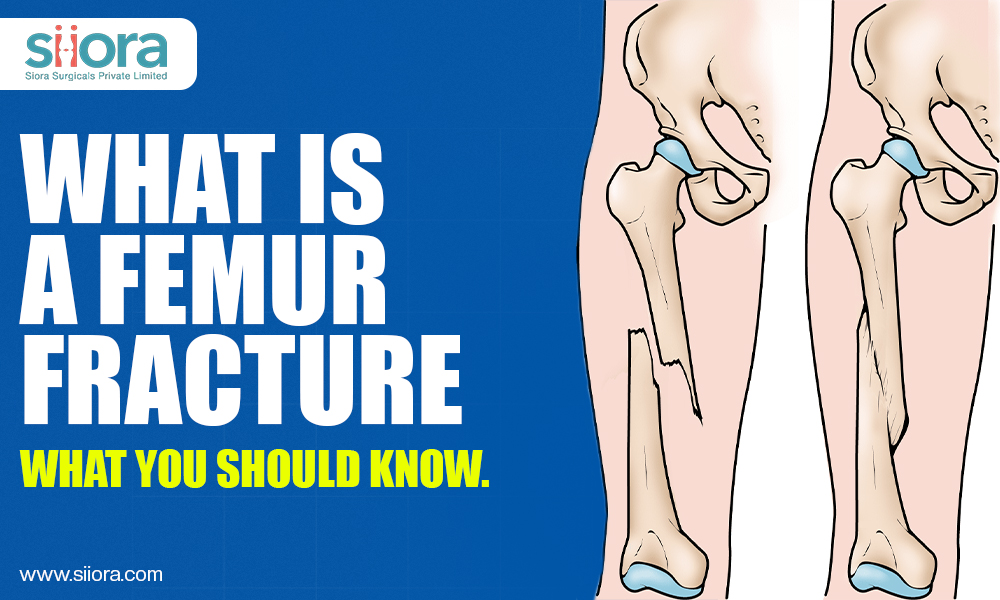
The strongest and longest bone in our body is the femur. It is present between the hip and knee and forms both these joints from its proximal and distal ends respectively. A break in this bone is termed a femur fracture and it often occurs because of high-energy trauma. Treatment of femur fractures often needs surgical intervention, like proximal femoral nail fixation.
This post will talk about femur fractures in deep along with their diagnosis and treatment.
Femur Fracture – An Overview
A tremendous force is required for the femur to break and hence, femur fractures are severe. This bone performs several key body functions that include:
- Holding the weight of the body
- Helping us move and stand
- Connecting important muscles, tendons, and ligaments of the hip and knee to the rest of the body
When a break in the femur occurs, damage to these connective tissues is likely, and sometimes, it could be severe.
What Causes Femur Fractures?
High-intensity trauma like an automobile accident, collisions with other players, and a severe impact on the bone such as a gunshot can cause a break(s) in the femur. However, elderly people above 60 years of age are more prone to developing fractures. Besides this, people suffering from conditions like osteoporosis also get femur fractures without any significant cause. An osteoporotic person may even break his/her femur just by falling from a standing position.
Why Femur Fractures Are Considered Serious?
Femur fractures are severe most of the time, and there is a reason behind that. Here are some of the severe complications that may accompany a broken femur:
- Excessive bleeding in the case of an open fracture along with severe damage to the skin
- Sometimes, the person may go into shock
- If the upper part of the femur (proximal femur) breaks, there is a risk of hip fracture
- People with knee replacements or osteoporosis may experience knee fractures if the part of the femur just above the knee breaks
Immediate medical attention is required for femur fractures to avoid severe complications.
What is the Diagnosis of Femur Fractures?
A thorough physical examination is required for the correct diagnosis of femur fractures followed by imaging tests. At first, the healthcare service provider will assess the severity of the condition by examining the injured site for swelling, bruising, and tenderness. The orthopedic specialist will also look for deformities if there. After this, imaging tests will be ordered to confirm the exact location, type, and severity of the fracture. The tests performed may include:
- X-ray
- CT Scan
- MRI
How Femur Fractures Are treated?
Surgery is the treatment option for most femur fracture cases. The type of surgery required and when it should be performed depends on the severity. Sometimes, the first step in the treatment of femur fracture includes stabilizing the fractured bone using splints to improve symptoms. The surgery is then performed later. The available surgical options include:
- Open Reduction and Internal Fixation (ORIF)
- External Fixation
If you are looking for advanced orthopedic solutions, contact Siora Surgicals Pvt. Ltd., a renowned manufacturer of trauma implants and instruments in India. The company has a huge global footprint with presence in over 50 countries. It is also looking for distributors of orthopedic Implants in Brazil to expand its international market reach.
 Siora Surgicals Pvt. Ltd.